Mastering Kubernetes Security: A Comprehensive Approach to Cloud-Native Protection
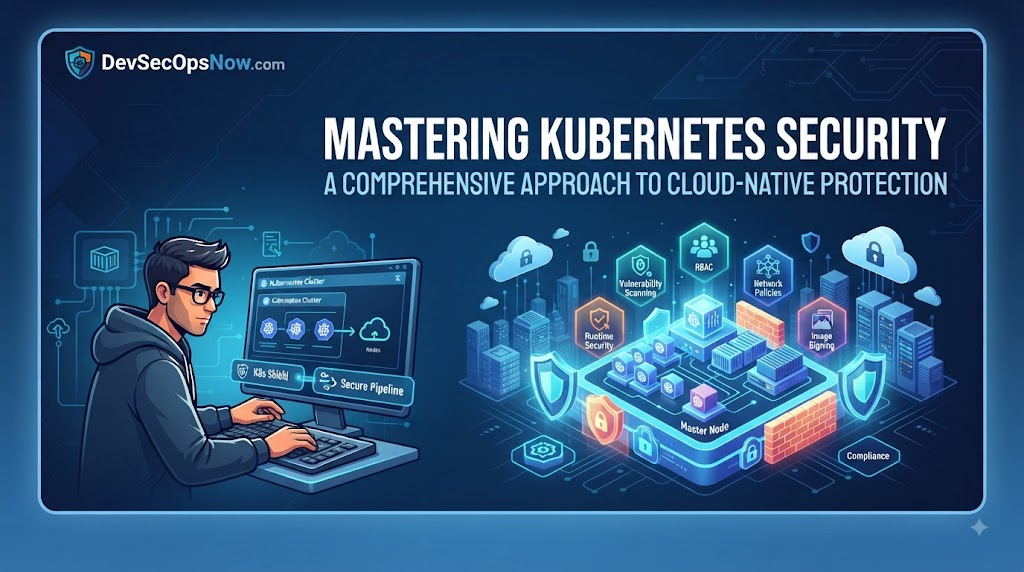
Modern software delivery relies heavily on containerized architectures and orchestration platforms to achieve scalability, speed, and agility. As organizations migrate their workloads to cloud-native environments, securing these complex ecosystems becomes a paramount operational challenge. Traditional perimeter-based security measures fall short when applied to dynamic, fast-changing container clusters. Effective protection requires a shift toward deep architectural visibility, rigorous configuration governance, and continuous runtime monitoring. Achieving this resilience demands dedicated focus, robust tooling, and structured guidance such as that offered through Kubernetes Security Consulting Services to help teams identify vulnerabilities before malicious actors can exploit them.
Understanding Kubernetes Security
Kubernetes security is a multi-layered discipline focused on protecting containerized applications, the underlying cluster infrastructure, and the communication pathways between microservices. Because Kubernetes abstracts physical hardware and operating systems, its security model relies heavily on declarative configurations, software-defined networking, and granular identity controls.
At its core, Kubernetes coordinates workloads across a cluster made up of a control plane and worker nodes. Securing this environment involves safeguarding the API server, managing how applications authenticate and authorize within the cluster, and isolating workloads to prevent lateral movement if a single container is compromised. Teams across development, operations, and security must collaborate closely—often supported by specialized DevSecOps Consulting Services—to ensure that security policies are integrated directly into the deployment pipeline rather than treated as an afterthought.
Why DevSecOps and Security Matter in Kubernetes Environments
Integrating security early into the lifecycle of containerized deployments is essential for mitigating risk without sacrificing development velocity. In fast-paced cloud-native environments, manual security reviews cannot keep pace with frequent code commits and automated cluster scaling.
Adopting a continuous security model ensures that misconfigurations, outdated container images, and overly permissive access controls are caught long before production deployment. When organizations invest in DevSecOps Implementation Services, they establish automated guardrails that enforce compliance, scan container registries, and validate infrastructure-as-code scripts automatically. This proactive approach minimizes human error, reduces the attack surface, and ensures that security scales synchronously with infrastructure growth.
Key Components of Kubernetes Security
Security in CI/CD Pipelines
Integrating security checks into automated build and deployment pipelines is the first line of defense for containerized applications. This practice involves scanning application source code, analyzing Dockerfiles for security anti-patterns, and validating Kubernetes manifests against established security benchmarks before anything reaches a staging or production cluster.
Vulnerability Management
Container ecosystems rely heavily on third-party base images and open-source packages. A robust vulnerability management program continuously inspects container images for known Common Vulnerabilities and Exposures, prioritizes findings based on actual exploitability within the cluster, and triggers automated rebuilds when patches become available.
Infrastructure and Cloud Security
Because Kubernetes clusters typically run on top of public cloud infrastructure, underlying cloud misconfigurations can directly compromise cluster security. Securing the environment requires locking down cloud provider APIs, managing IAM roles securely, encrypting data at rest and in transit, and restricting network access to cluster control planes.
Container and Kubernetes Security
Cluster-level hardening involves configuring Role-Based Access Control correctly, enforcing Pod Security Standards to restrict privileged containers, utilizing network policies to segment pod-to-pod communication, and securing the Kubernetes API server against unauthorized access.
Software Supply Chain Security
Ensuring the integrity of artifacts from code commit to cluster deployment is critical. This involves generating Software Bill of Materials documents, signing container images cryptographically, and verifying provenance to prevent tampering throughout the software delivery lifecycle.
Real-World Kubernetes Security Use Cases
Organizations apply Kubernetes security practices to address specific operational vulnerabilities and threat vectors. For example, a financial services enterprise utilizing DevSecOps Managed Services may implement automated admission controllers to block any deployment that runs containers with root privileges or fails to specify resource limits.
Another common use case involves securing multi-tenant clusters where multiple development teams share the same physical infrastructure. By enforcing strict namespace isolation, network policies, and RBAC, organizations can prevent a compromised application in one namespace from accessing sensitive data or workloads in another. Additionally, teams frequently engage professionals to conduct thorough evaluations through DevSecOps Assessment Services to uncover hidden configuration drift and validate their overall cluster security posture against industry standards.
Common Kubernetes Security Challenges
Securing container orchestration platforms introduces unique operational hurdles that teams must navigate carefully:
- Excessive Security Alerts: Automated scanning tools often generate high volumes of low-priority alerts, leading to alert fatigue and delayed remediation.
- Complex Access Controls: Configuring fine-grained RBAC across hundreds of microservices and users is inherently difficult and prone to human error.
- Cloud Misconfigurations: Dynamic cloud environments frequently suffer from overly permissive IAM policies and exposed storage buckets.
- Developer Friction: Introducing rigid security gates without proper tooling can slow down release velocity and create friction between development and security teams.
- Supply Chain Blind Spots: Tracking vulnerabilities across nested dependencies and third-party base images remains a significant visibility challenge.
Role of Professional DevSecOps Services
Navigating the complexities of cloud-native security often requires specialized external expertise. Professional guidance helps internal teams establish resilient architectures, automate security workflows, and implement industry best practices effectively. Organizations often leverage targeted interventions such as Cloud Security Consulting Services to secure underlying cloud resources or engage specialists for comprehensive Penetration Testing Services to simulate realistic attacks against their clusters. Furthermore, maintaining an ongoing security posture can be streamlined through comprehensive DevSecOps Managed Services, allowing internal engineers to focus on application delivery while security experts monitor and manage cluster defense mechanisms continuously.
Importance of DevSecOps Training
Building a secure cloud-native culture requires empowering personnel across all technical roles with the right knowledge and practical skills. Security cannot remain solely within the domain of dedicated security engineers; developers and system administrators must understand secure coding and configuration principles.
DevSecOps Training
Individual skill development focuses on teaching engineers how to write secure code, identify common application vulnerabilities, and understand how container runtimes operate under the hood.
Corporate DevSecOps Training
Structured organizational training programs align cross-functional teams around shared security objectives, establishing standard operating procedures for vulnerability triage, incident response, and compliant deployments.
Hands-On Learning
Practical lab environments, simulated cluster compromise scenarios, and interactive capture-the-flag exercises allow technical teams to experience real-world attack vectors and master defensive mitigation techniques safely.
How Kubernetes Security Assessments Work
Evaluating the security posture of a containerized environment requires a methodical, step-by-step evaluation process:
- Understanding the Environment: Reviewing cluster architecture, node configurations, network topologies, and cloud provider integrations.
- Identifying Security Requirements: Establishing compliance frameworks and internal security baselines applicable to the workloads.
- Reviewing Workflows: Examining CI/CD pipelines, container build processes, and deployment automation scripts.
- Evaluating Security Controls: Assessing RBAC configurations, network policies, secrets management, and admission controller rules.
- Identifying Vulnerabilities: Running automated scans and manual configuration audits to uncover exposed endpoints and outdated packages.
- Prioritizing Findings: Categorizing identified risks based on business impact, exploitability, and ease of remediation.
- Recommending Remediation: Providing actionable guidance to patch vulnerabilities, tighten permissions, and harden cluster configurations.
Role of Penetration Testing in Kubernetes Security
Penetration testing provides a vital validation layer by actively simulating how an adversary might attempt to breach a containerized environment. Unlike automated scanners that look for known configuration signatures, authorized penetration testing evaluates the cumulative impact of multiple minor misconfigurations—such as escaping a container, pivoting through a vulnerable microservice, and attaining cluster admin privileges.
Testing must always be conducted within a strictly defined scope and authorized framework to protect production stability. Findings derived from these tests help security teams prioritize critical architectural flaws, refine network segmentation, and strengthen runtime defenses against sophisticated, multi-stage attacks.
DevSecOps Security Best Practices
- Implement Least Privilege Access: Restrict user and service account permissions to the absolute minimum required for operational tasks.
- Enforce Pod Security Standards: Prevent containers from running with root privileges and enforce read-only root filesystems where feasible.
- Scan Images Continuously: Integrate automated vulnerability scanning into container registries and CI/CD pipelines.
- Secure Secrets Management: Avoid storing sensitive credentials in plain text within configuration files or source code repositories; use dedicated secret stores.
- Segment Cluster Networks: Utilize Kubernetes network policies to restrict pod-to-pod communication and limit lateral movement.
- Monitor Runtime Activity: Deploy runtime security tools to detect anomalous container behavior, unexpected process execution, and unauthorized network connections.
Comparison Table
| Security Approach | Primary Purpose | Best Used For | Key Consideration |
| Vulnerability Scanning | Finding known weaknesses in code and images | Continuous security checks in CI/CD pipelines | Requires effective alert prioritization |
| Penetration Testing | Simulating realistic attacks against infrastructure | Deeper security validation and architectural review | Requires defined scope and authorization |
| Security Assessment | Evaluating overall security posture and compliance | Comprehensive baseline review of clusters and workflows | Needs clear business objectives |
| Continuous Monitoring | Detecting active security events in real-time | Ongoing operational visibility | Requires tuning to minimize noise |
Future Trends in DevSecOps and Cybersecurity
The landscape of container and Kubernetes security continues to evolve rapidly alongside emerging technological paradigms. Artificial intelligence is increasingly integrated into security tooling to automate vulnerability analysis, predict misconfiguration trends, and triage alerts with greater accuracy.
At the same time, platform engineering security is gaining traction, embedding security guardrails directly into internal developer platforms so that developers can provision secure infrastructure without needing deep security expertise. Furthermore, the industry is seeing broader adoption of zero-trust architecture principles, runtime security observability, and cryptographic software bills of materials to ensure end-to-end provenance across complex distributed software supply chains.
Frequently Asked Questions
What is DevSecOps?
DevSecOps is the practice of integrating security testing and compliance checks at every phase of the software development lifecycle, from initial design through automated deployment and ongoing operations.
How does DevSecOps improve software security?
It embeds security automation and proactive risk management directly into existing developer workflows, ensuring vulnerabilities are identified and resolved early rather than discovering them after production release.
What is the difference between vulnerability scanning and penetration testing?
Vulnerability scanning is an automated, continuous process designed to identify known weaknesses and outdated packages, whereas penetration testing is a targeted, human-led simulation of an attack to evaluate deeper architectural resilience.
How do admission controllers enhance Kubernetes security?
Admission controllers intercept requests to the Kubernetes API server prior to object persistence, allowing organizations to automatically enforce security policies such as blocking privileged containers or requiring specific labels.
Why is container image minimalism important for security?
Using minimal base images reduces the overall attack surface by stripping out unnecessary binaries, shells, and utilities that could otherwise be leveraged by an attacker during a container escape.
What role does Role-Based Access Control play in a cluster?
RBAC restricts access to the Kubernetes API by defining which users and service accounts can perform specific actions on particular resources, effectively preventing unauthorized cluster modifications.
Conclusion
Securing modern cloud-native infrastructure requires a deliberate shift from reactive patching to continuous, automated protection. By understanding the unique architectural nuances of container orchestration and integrating robust governance across every stage of the software lifecycle, organizations can significantly reduce their exposure to risk. Embracing a culture of shared responsibility, leveraging specialized expertise where appropriate, and maintaining rigorous operational visibility ensures that engineering teams can innovate rapidly while keeping their digital assets secure.
Leave a Reply